
Safety hub
Workplace health & safety in Queensland, explained
Free, plain-English guides and toolbox talk ideas covering SWMS, risk assessments, incident reporting, plant, heat and more. Written by people who run jobs, for people who run jobs.
Start here · Compliance & paperwork
What is a Safe Work Method Statement (SWMS)?
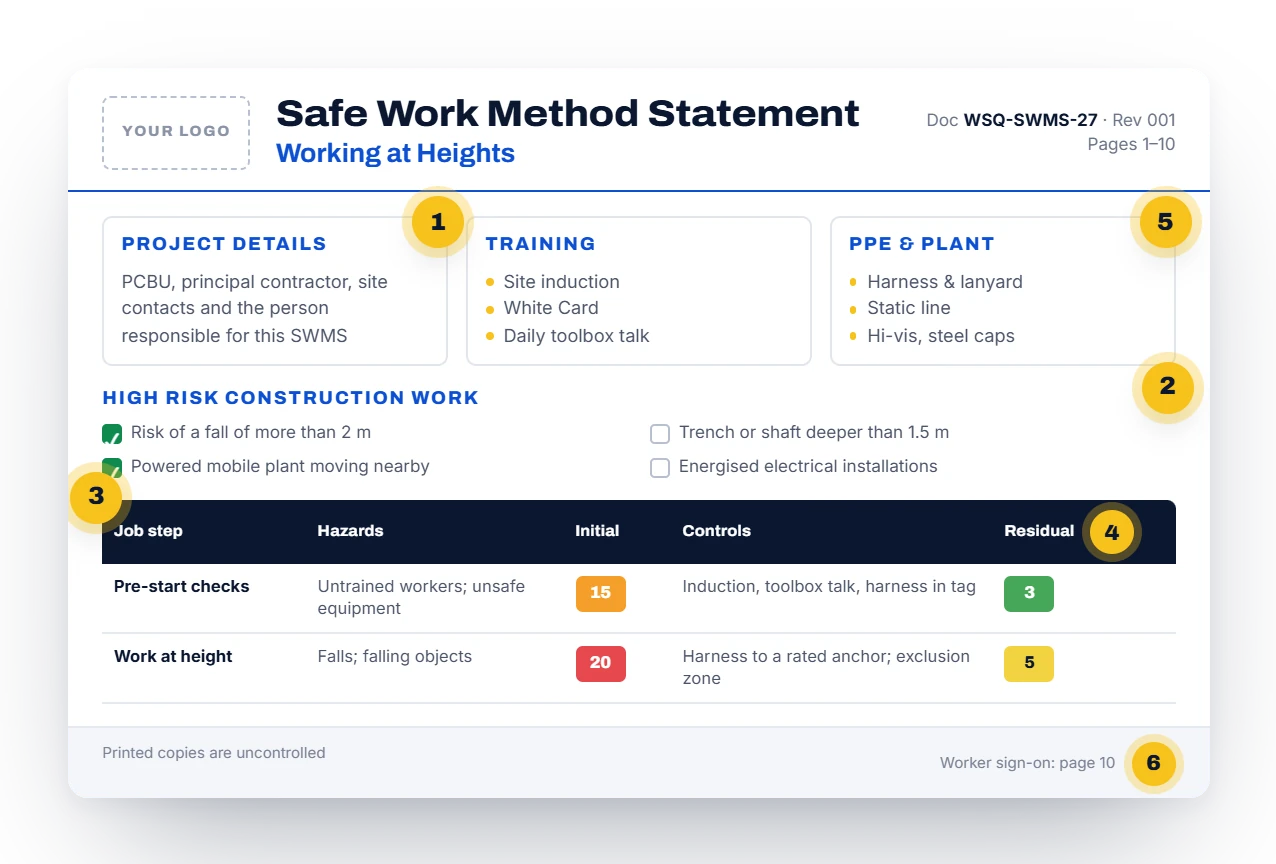
What a SWMS is, when Queensland law requires one, what it has to include and how to write one your crew will actually follow.
Ryan Graham, WHS Officer · 4 min read
All guides
Browse by topic
17 July 2022
How to Handle Allergic Reactions in the Workplace
An allergy is a condition in which the body’s immune system reacts to a substance that is usually harmless.
15 July 2022
The Importance of Organised Storage Areas in the Workplace
When materials are organised and stored in a specific area, it reduces the amount of time employees spend searching for items.
7 July 2022
The Top 9 Work Health & Safety Habits to Keep You Safe at Work
Wearing the proper safety gear is essential to keeping yourself safe at work.
7 July 2022
How to Stay Safe When Working Near Mobile Equipment
Mobile equipment is any type of machinery that is designed to move from one location to another.
7 July 2022
14 Steps to Safe Refueling: How to Avoid Accidents and Spills in the workplace
By taking a few simple steps, you can avoid accidents and spills. Here are some tips for safe refueling:
3 June 2022
First Aid in the Workplace: What to Do When an Accident Happens
First aid is essential in the workplace because it can help to save lives. When an accident happens, having a plan and knowing what to do can make all the difference.
3 June 2022
How To Properly Use A Fire Extinguisher
While some workplace fires are caused by accidental factors, such as faulty electrical wiring, many are the result of preventable human error.
3 June 2022
7 Steps to Safe Excavation: How to Avoid Injuries When Digging
Excavation is the process of removing earth, rock, or other materials from an area using tools, machines, or explosives.
3 June 2022
How to Eliminate Hazards in the Workplace
Every workplace has its own set of hazards. Some are more obvious than others, but they all pose a risk to employees.
3 June 2022
Electrical Safety at Work: How to Keep Yourself Safe
If you are working with electricity, always make sure that you have the proper training.
3 June 2022
9 Steps to Prevent Electrical Injuries in the Workplace
If you must use electrical equipment in wet or damp areas, be sure to use a ground fault circuit interrupter (GFCI) to help prevent shocks.
3 June 2022
The Dangers of Excessive Sitting: How to Stay Healthy and Avoid the Risks
Sitting all day at work is dangerous to your health. You probably know this, but you may not know the extent of the risks.
Turn the guide into paperwork.
Every guide links to the template that puts it into practice. Start with the free SWMS template.