Skip to content

Epoxy Flooring Application SWMS

Epoxy flooring application in Queensland: grinding dust, solvent and isocyanate fumes, skin contact, mixing and slips. An editable Word SWMS template.

RG

Written by Ryan Graham, health and safety professional (16 years on Queensland sites)

$49.99 incl. GST

AUD · one-off purchase · instant download

  • Instant download · your links arrive by email straight after checkout and work for 3 months, so save your copy
  • Make it yours in minutes · edit in Microsoft Word and add your logo
  • Quality guarantee · we'll fix any problem, then refund you or give store credit if you're still not happy
  • Secure checkout · card, Apple Pay or Google Pay through Stripe

About this template

Suits flooring contractors, concrete coating specialists and builders who prepare and coat concrete floors with epoxy and polyurethane systems. It follows the work from checking the floor and the products, through surface preparation, mixing, base and topcoats, curing and clean-up. It does not cover concrete sealer spraying, which needs its own SWMS.

Grinding or shot blasting the concrete to prepare the floor is the normal start of an epoxy job and releases respirable crystalline silica dust, so the contaminated or flammable atmosphere item (WHS Regulation s 291(l), item 11) is ticked; solvent and amine vapours in a closed room also fit that item. A SWMS is required by law for high risk construction work (s 299). If your floor needs no grinding, you can untick it. Tick any other item that applies, such as a fall of more than 2 metres or energised electrical installations or services.

New to SWMS? Read What Is A Safe Work Method Statement?

What Is Covered In Our Epoxy Flooring Application SWMS?

After the standard pre-start checks, the job steps run from “Plan the job: floor, product and ventilation” to “Clean up, dispose of waste and pack up”. The hazards and controls include:

  • Silica dust from grinding and shot blasting
  • Solvent and amine vapours in enclosed rooms
  • Isocyanate exposure from topcoats
  • Skin contact and sensitisation from resin and hardener
  • Mixed resin overheating in the pail
  • Fire from ignition sources near solvents
  • Slips on wet resin and loose aggregate
  • Strains from drums, pails and kneeling
  • Noise and vibration from grinders
  • Rags and waste that can heat up
  • Suspected asbestos in old coatings and adhesives
  • Other trades entering the cure area

High Risk Construction Work

These high risk construction work items (WHS Regulation 2011 (Qld) s 291) are already ticked because they are part of this work. Tick any others that apply to your job:

  • Is carried out in an area that may have a contaminated or flammable atmosphere

Licences, Training and Competency

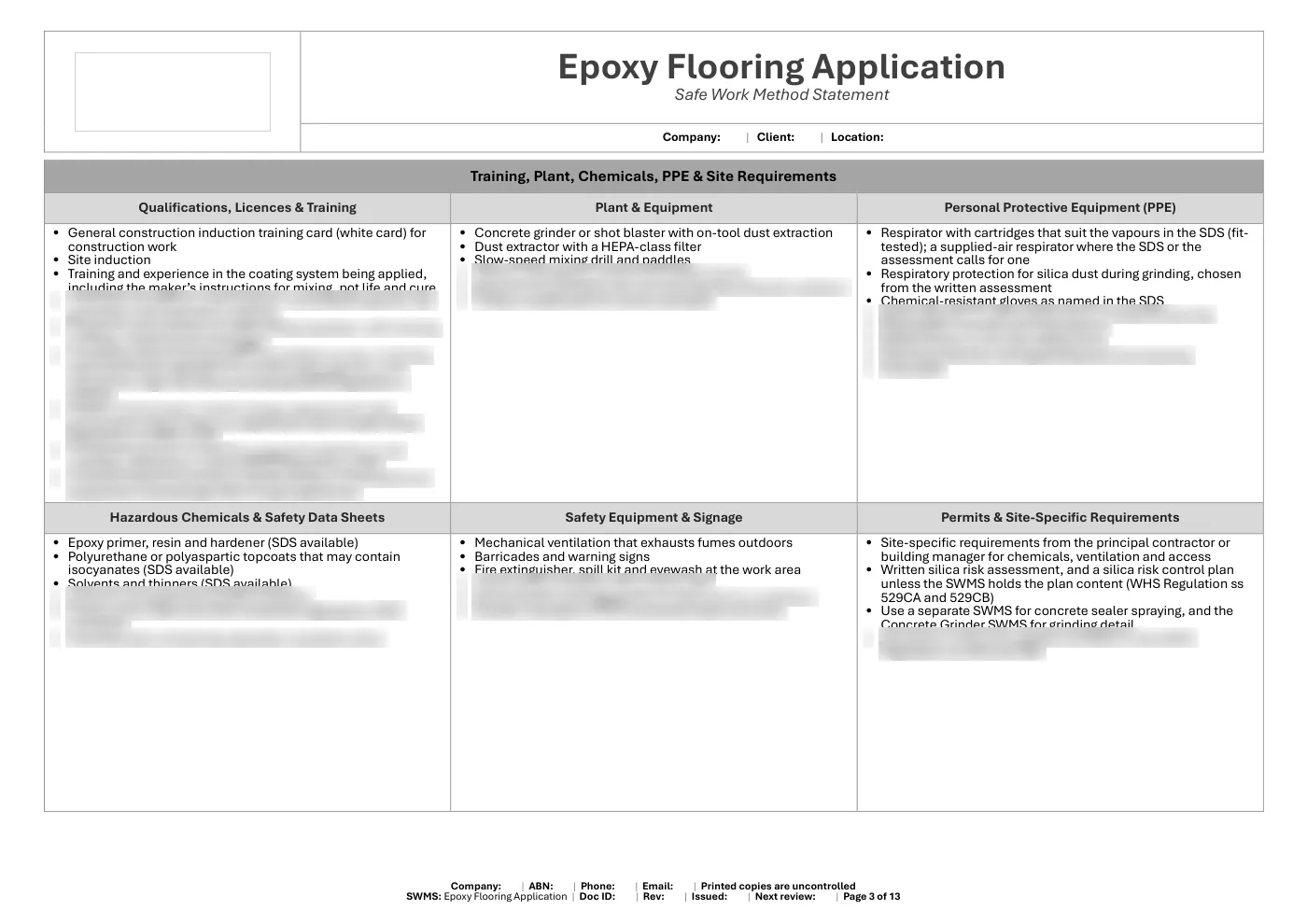
  • General construction induction training card (white card) for construction work
  • Site induction
  • Training and experience in the coating system being applied, including the maker’s instructions for mixing, pot life and cure
  • Training in the SDS for each product, including the gloves, eye protection and respirator it calls for
  • Fit test for each wearer of a tight-fitting respirator, with training in fitting, checking and cleaning it
  • Crystalline silica training (a VET accredited course or training approved by the regulator) for workers who may do, or be exposed to, high risk silica processing (WHS Regulation s 529CD)
  • Health monitoring for workers doing ongoing work with isocyanates where there is a significant risk to health (WHS Regulation ss 368 to 370)
  • Competent person to identify suspected asbestos in old coatings, adhesives or sheet (WHS Regulation s 422)
  • Licensed electrical worker to isolate power or fixed electrical equipment; licensed gas fitter for gas appliances

Legislation and Codes of Practice Referenced

  • Work Health and Safety Act 2011 (Qld)
  • Work Health and Safety Regulation 2011 (Qld)
  • Managing Risks of Hazardous Chemicals in the Workplace Code of Practice 2021
  • Labelling of Workplace Hazardous Chemicals Code of Practice 2021
  • Preparation of Safety Data Sheets for Hazardous Chemicals Code of Practice 2021
  • Spray Painting and Powder Coating Code of Practice 2021
  • Managing respirable crystalline silica dust exposure in construction and manufacturing of construction elements Code of Practice 2022
  • Managing Noise and Preventing Hearing Loss at Work Code of Practice 2021
  • Hazardous Manual Tasks Code of Practice 2021
  • Confined Spaces Code of Practice 2021
  • Managing the Work Environment and Facilities Code of Practice 2021
  • How to Manage and Control Asbestos in the Workplace Code of Practice 2021 (to recognise suspect material)
  • First Aid in the Workplace Code of Practice 2021
  • How to Manage Work Health and Safety Risks Code of Practice 2021
  • Electrical Safety Act 2002 (Qld): electrical work by a licensed electrical worker (s 55)
  • Electrical Safety Regulation 2026 (Qld): electrical equipment on construction sites (s 140)
  • AS/NZS 1716:2012 (Respiratory protective devices) and AS/NZS 1715:2009 (Selection, use and maintenance of respiratory protective equipment), as named in WHS Regulation s 529B

What You Get

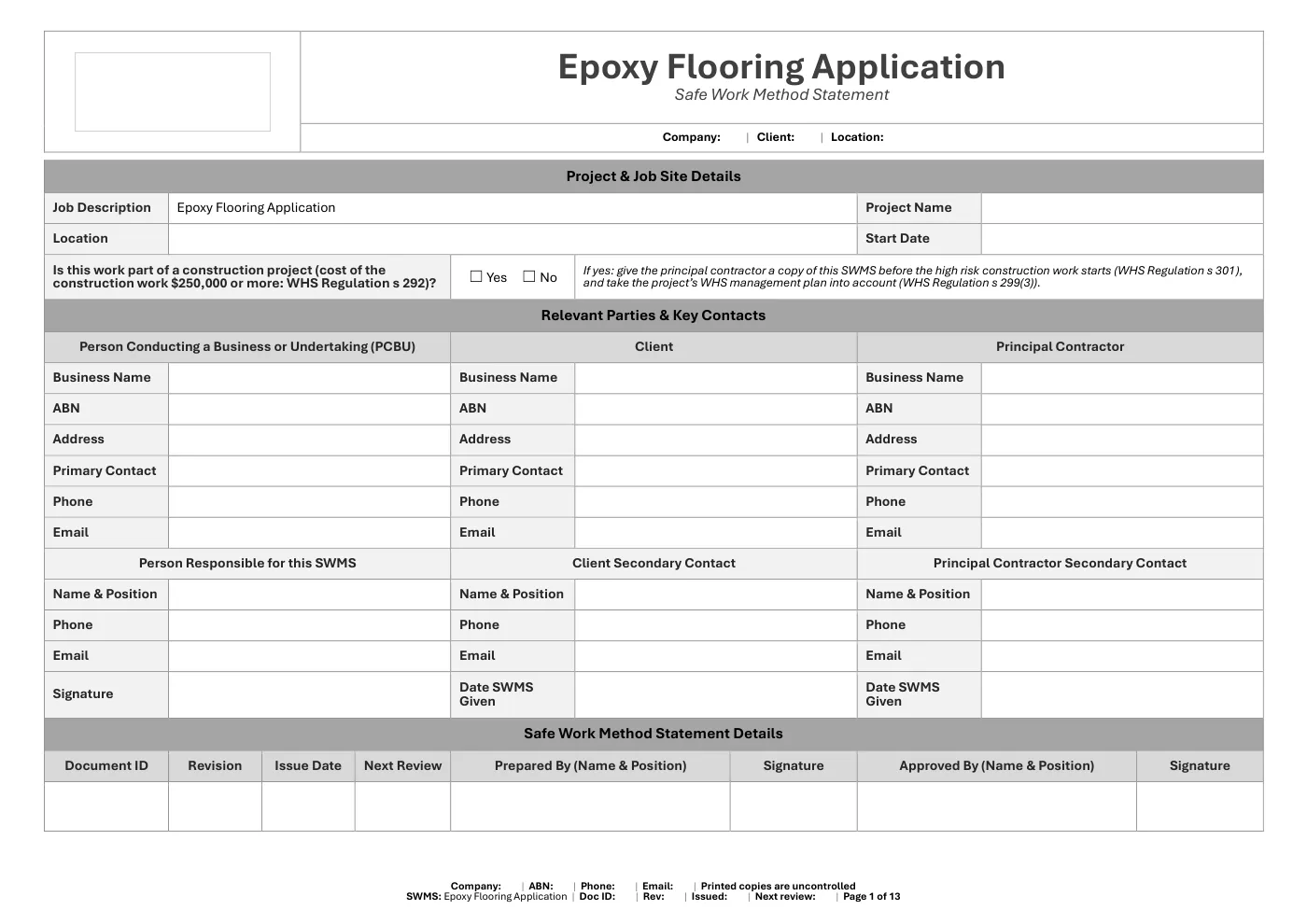
  • An editable Microsoft Word document (13 A4 landscape pages). Type your business, client and job details once and they fill in on every page, with a space for your logo
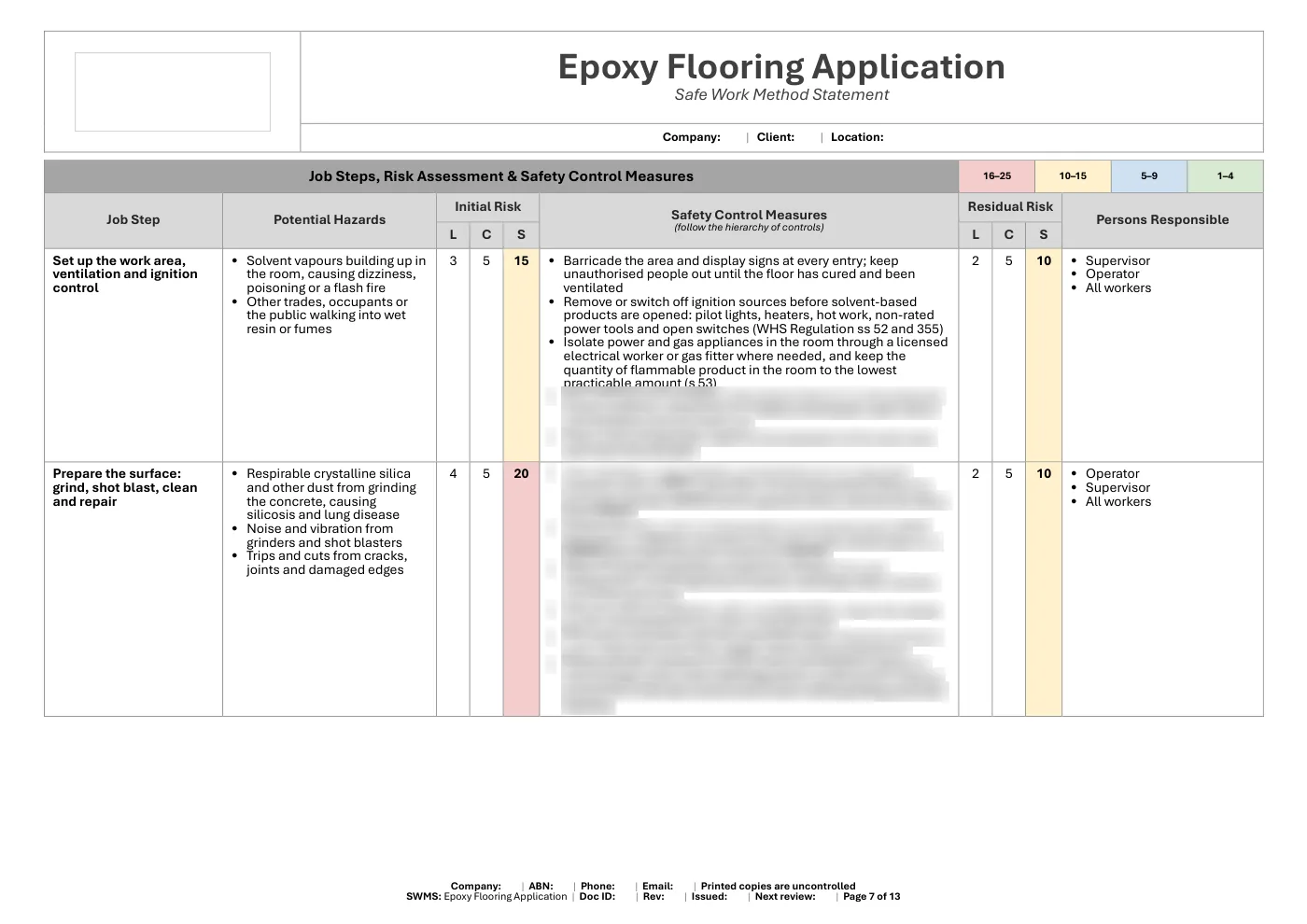
  • 9 job steps for this work, each with its hazards, controls, initial and residual risk scores and the person responsible
  • PPE listed for this job: respirator with cartridges that suit the vapours in the SDS (fit-tested); a supplied-air respirator where the SDS or the assessment calls for one
  • Emergency arrangements for: chemical in the eyes, worker overcome by fumes and fire in the work area
  • Plus the parts every Work Safety QLD SWMS shares, from the s 291 checklist to the worker sign-on sheet (see the layout in our free SWMS template)

Adjust it for your site, plant and crew, and talk it through with your workers before work starts. Please make sure you read our Disclaimer before downloading this SWMS.

Checked against the Queensland laws and codes of practice listed above. Last reviewed November 2026.

Having trouble with your download? Contact us any time. Please read our Disclaimer before downloading.

How to use it

From download to site in three steps

Buy and download

Check out with card, Apple Pay or Google Pay. Your download buttons appear straight away and the links are emailed to you. Links work for 3 months, so save your copies.

Make it yours

Open it in Microsoft Word or Excel. Add your logo, business details, site and job information, and adjust it to how the work is done.

Brief your crew

Talk it through with the workers doing the job, have them sign on, and keep it on site. Review it whenever the job or conditions change.

FAQ

Before you buy

Something else? Ask us and a real person will reply.

What format is it?

Microsoft Word. Edit it in Word, or free in Word for the web, and add your own logo and business details.

How do I get it after I pay?

Your download buttons appear as soon as checkout finishes, and the links are emailed to you. You can re-download from your account at any time.

Is it compliant with Queensland law?

It's written around Queensland's Work Health and Safety Act 2011 and Regulation 2011. Tailor it to your site, consult your workers and review it whenever conditions change; no template can guarantee compliance on its own.

What if it isn't right for my job?

If it doesn't match its description or has a fault, tell us and we'll fix it. If you're still not happy, we'll refund you or give you store credit, your choice. Check the sample pages first, as we don't refund a change of mind.
Reviews

Be the first to review “Epoxy Flooring Application SWMS”

Your email address will not be published. Required fields are marked *

Bought or downloaded this template from us? Leave an honest review, good or bad, and we'll email you a code for a free template of your choice (single templates, not packs). One per order.

More templates like this