
Jetty and Pier Construction SWMS
Editable Word SWMS template for building, repairing and inspecting jetties, piers and pontoons in Queensland, covering working over water, tides, barges, piling and drowning risk.
RG
Written by Ryan Graham, health and safety professional (16 years on Queensland sites)
$49.99 incl. GST
AUD · one-off purchase · instant download
- Instant download · your links arrive by email straight after checkout
- Make it yours in minutes · edit in Microsoft Word or Excel and add your logo
- Quality guarantee · we'll fix it or refund you if it isn't as described
- Secure checkout · card, Apple Pay or Google Pay through Stripe
Bundles
Bundles that include this template
About this template
Suits marine contractors, builders and civil crews who build, repair or inspect jetties, piers, pontoons and gangways. It follows the job in order, from planning around the tide and checking an existing structure through edge protection, drowning prevention and rescue, barge and boat work, moving plant on the deck and driving piles, to the substructure and decking, pontoons, inspections and pack-up. Crane operation, hot work, diving, boat ramps and seawalls are not covered.
Work in or near water with a risk of drowning, work with a risk of a person falling more than 2 metres, and work where powered mobile plant moves are all high risk construction work (WHS Regulation s 291), so those three items are ticked and a SWMS is required (s 299); clear any that your job does not involve, and tick a shipping lane or traffic corridor in use, energised services, confined spaces or structural repairs needing temporary support if it does.
Learn More: What Is A Safe Work Method Statement?
Have you ever been asked to provide a SWMS on a project in Queensland? Read our guide to what a Safe Work Method Statement is and when you need one.
What Is Covered In Our Jetty and Pier Construction SWMS?
The job steps run in the order the work is done, from pre-start checks to finishing up. The hazards and controls include:
- Falling into water and drowning
- Falls from decks, pile heads, bearers and bracing
- Falls through gaps in an incomplete deck
- Collapse of an existing jetty, pier or pontoon
- Barges and work boats listing, moving or colliding
- Crush and pinch injuries at mooring lines and gangways
- Being struck by piles, hammers and plant on the deck
- Hearing damage from pile driving
- Overhead line contact when a rig mast is raised
- Tide, current and weather catching crews and plant
- Marine stingers, sharks and crocodiles
- Heat illness, fatigue and sun exposure
- Asbestos, lead paint and treated timber dust
- Cuts and infection from marine growth
High Risk Construction Work
These high risk construction work items (WHS Regulation 2011 (Qld) s 291) are already ticked because they are part of this work. Tick any others that apply to your job:
- Involves a risk of a person falling more than 2m
- Is carried out in an area at a workplace in which there is any movement of powered mobile plant
- Is carried out in or near water or other liquid that involves a risk of drowning
Licences, Training and Competency
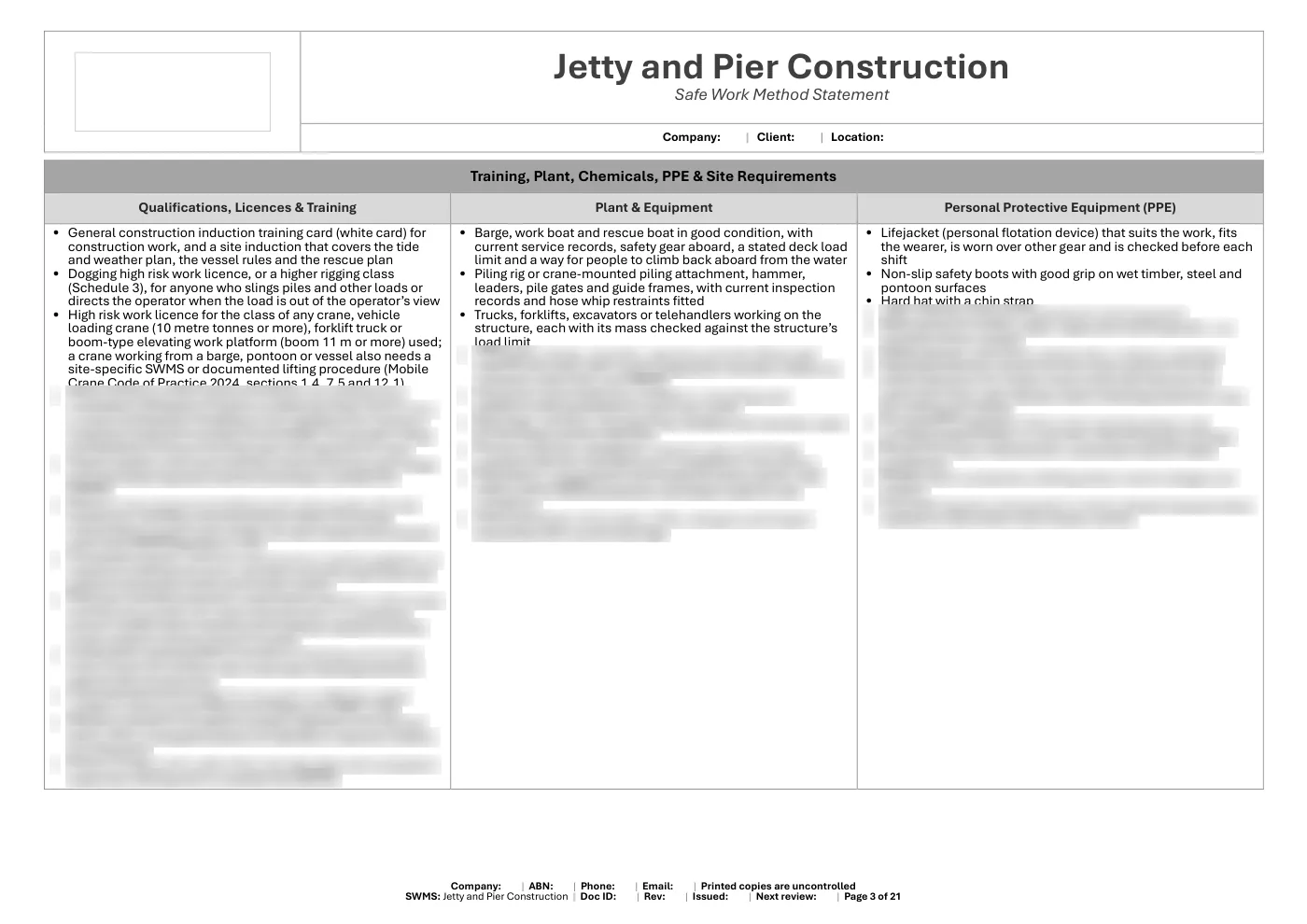
- General construction induction training card (white card) for construction work, and a site induction that covers the tide and weather plan, the vessel rules and the rescue plan
- Dogging high risk work licence, or a higher rigging class (Schedule 3), for anyone who slings piles and other loads or directs the operator when the load is out of the operator’s view
- High risk work licence for the class of any crane, vehicle loading crane (10 metre tonnes or more), forklift truck or boom-type elevating work platform (boom 11 m or more) used; a crane working from a barge, pontoon or vessel also needs a site-specific SWMS or documented lifting procedure (Mobile Crane Code of Practice 2024, sections 1.4, 7.5 and 12.1)
- Piling rig and hammer operators trained and assessed as competent. Schedule 3 names no piling rig class, but if a rig is a crane as Schedule 19 defines it (an appliance for raising or lowering a load and moving it horizontally), its operator needs the Schedule 3 licence for that type and capacity of crane
- Vessel masters and crew hold the marine licences each barge and work boat requires (marine licensing is outside this SWMS)
- Rescue crew trained and drilled in the rescue plan; first aid equipment, facilities and trained first aiders (including resuscitation) as the work needs, for each vessel and isolated work area (WHS Regulation s 42)
- Competent person, such as a structural or marine engineer, to assess an existing structure, set deck and pile load limits and approve temporary works and anchor points
- Training in the fall protection used (travel restraint or fall arrest) and the rescue plan, for users and rescuers; a competent person installs travel restraint and inspects restraint and fall arrest systems at least every 6 months
- Audiometric testing within 3 months of starting and at least every 2 years for workers who must wear hearing protection against pile driving noise
- Licensed electrical worker for any work on lighting, power outlets or shore power (Electrical Safety Act 2002, s 55)
- Workers trained to recognise suspect asbestos and old lead paint, with a competent person to identify or assume it before it is disturbed
- Divers, if used, work under their own dive plan and competent supervisor (diving work is outside this SWMS)
Legislation and Codes of Practice Referenced
- Work Health and Safety Act 2011 (Qld)
- Work Health and Safety Regulation 2011 (Qld)
- Managing the Risk of Falls at Workplaces Code of Practice 2021
- Managing Risks of Plant in the Workplace Code of Practice 2021
- Mobile Crane Code of Practice 2024 (sections 1.4, 7.5 and 12.1: documented lifting procedures, and cranes on barges, pontoons and vessels)
- Hazardous Manual Tasks Code of Practice 2021
- Managing Noise and Preventing Hearing Loss at Work Code of Practice 2021
- Managing the Work Environment and Facilities Code of Practice 2021
- First Aid in the Workplace Code of Practice 2021
- Managing Risks of Hazardous Chemicals in the Workplace Code of Practice 2021
- Confined Spaces Code of Practice 2021 (pontoon compartments and hollow piles)
- How to Manage and Control Asbestos in the Workplace Code of Practice 2021 (existing structures)
- Occupational Diving Work Code of Practice 2005 (diving work is outside this SWMS)
- How to Manage Work Health and Safety Risks Code of Practice 2021
- Electrical Safety Act 2002 (Qld)
- Electrical Safety Regulation 2026 (Qld): overhead line exclusion zones in schedule 2, and construction site electrical equipment (s 140)
- Electrical Safety Code of Practice 2021 – Managing electrical risks in the workplace (leads and tools in wet conditions)
- Safe Work Australia model Code of Practice: Construction work (guidance)
What You Get
- An editable Microsoft Word document (21 pages), laid out on A4 landscape pages
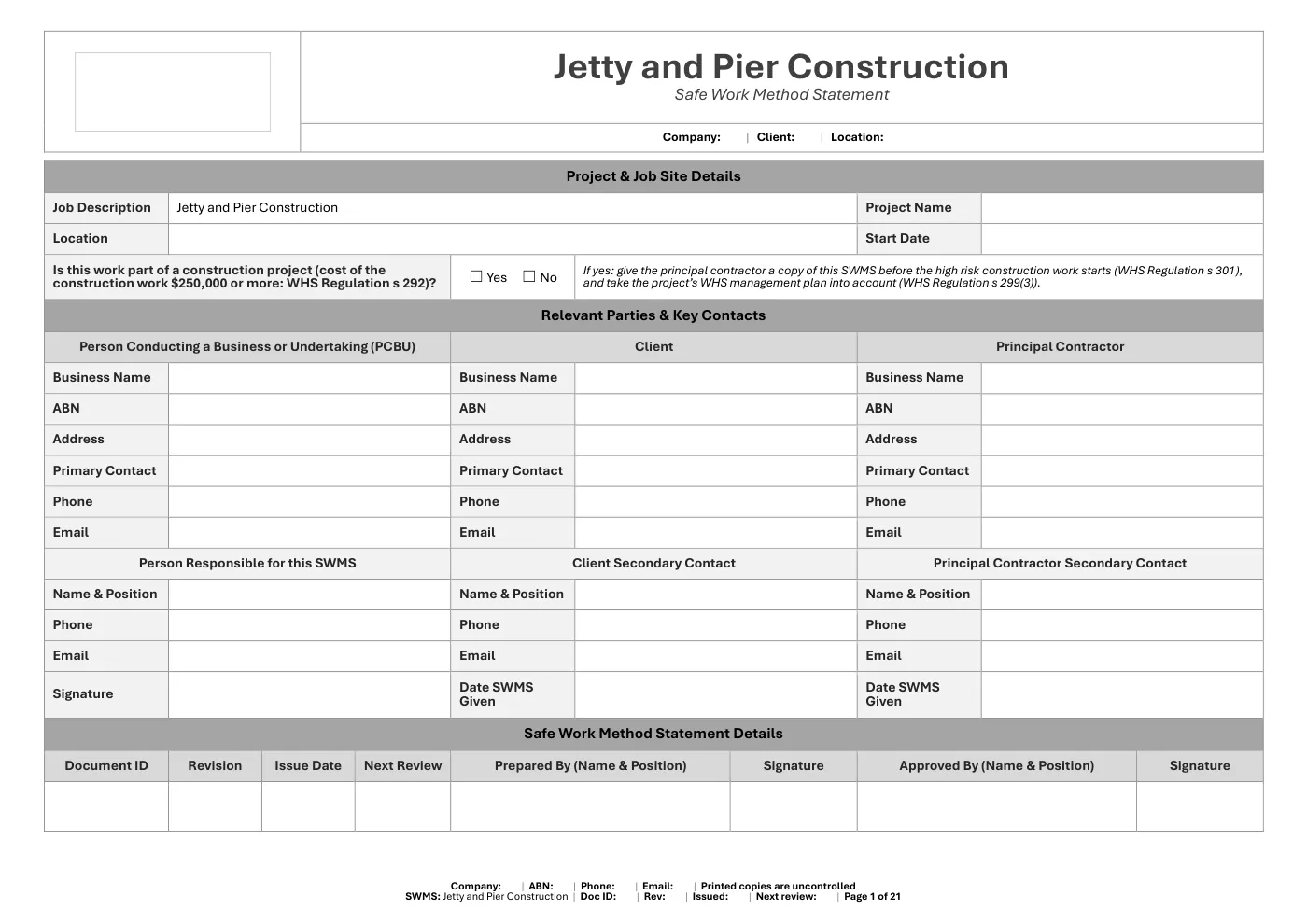
- Business, client, job and document details typed once and filled in on every page, plus a space for your logo
- The high risk construction work checklist, worded as WHS Regulation s 291, and the construction project question (s 292)
- A worker and health and safety representative consultation record
- Qualifications, plant, PPE, hazardous chemicals, safety equipment, permits, references and emergency arrangements filled in for this work
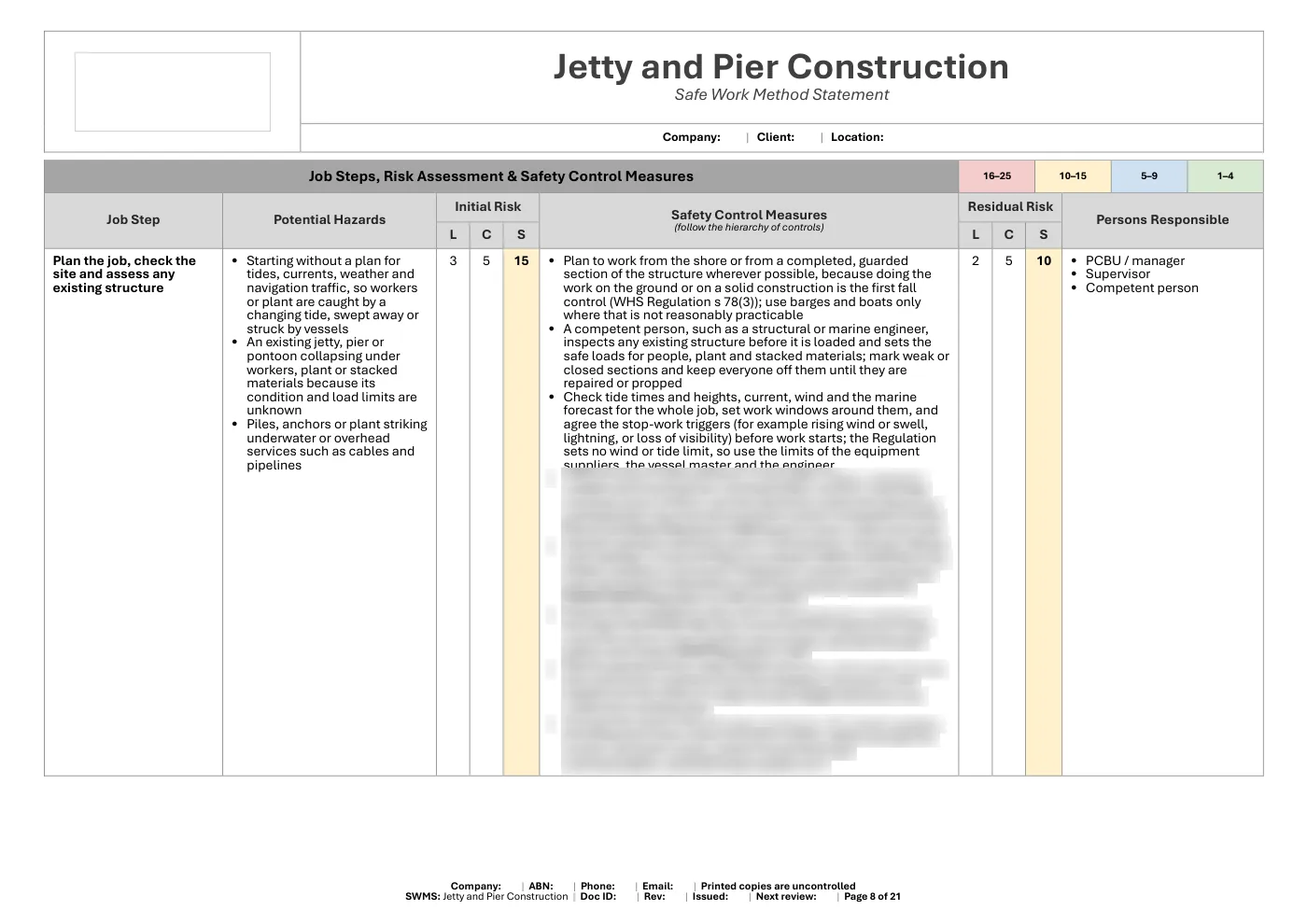
- A 5 x 5 risk matrix, and job steps with initial and residual risk scores and the people responsible
- Implementing, monitoring and review requirements, an additional controls log, revision history and a worker sign-on sheet
Review and adjust it for your site, your plant and the way your crew does the job, and talk it through with your workers before work starts. If you have any trouble downloading this SWMS, you can contact us at any time. Please make sure you read our Disclaimer before downloading this SWMS.
How to use it
From download to site in three steps
Buy and download
Check out with card, Apple Pay or Google Pay. Your download buttons appear straight away and the links are emailed to you.
Make it yours
Open it in Microsoft Word or Excel. Add your logo, business details, site and job information, and adjust it to how the work is done.
Brief your crew
Talk it through with the workers doing the job, have them sign on, and keep it on site. Review it whenever the job or conditions change.
What format is it?
Microsoft Word (registers are Excel). Edit it in Word or Excel, or free in Word and Excel for the web, and add your own logo and business details.
How do I get it after I pay?
Your download buttons appear as soon as checkout finishes, and the links are emailed to you. You can re-download from your account at any time.
Is it compliant with Queensland law?
It's written around Queensland's Work Health and Safety Act 2011 and Regulation 2011. Tailor it to your site, consult your workers and review it whenever conditions change; no template can guarantee compliance on its own.
What if it isn't right for my job?
If it doesn't match its description or has a fault, we'll fix it, and if we can't, we'll refund you (or give you store credit if you'd prefer). Check the sample pages first, as we don't refund a change of mind.
Reviews
More templates
Reviews