
Graffiti Removal SWMS
Removing graffiti in Queensland with chemical strippers, pressure washing and abrasive methods, covering solvent exposure, overspray, slippery surfaces and ladders. An editable Word SWMS template for Queensland.
RG
Written by Ryan Graham, health and safety professional (16 years on Queensland sites)
$39.99 incl. GST
AUD · one-off purchase · instant download
- Instant download · your links arrive by email straight after checkout and work for 3 months, so save your copy
- Your business name and logo · we fill them into every document for A$29 (free on orders of A$500 or more), or edit it yourself in Microsoft Word
- Quality guarantee · we'll fix any problem, then refund you or give store credit if you're still not happy
- Secure checkout · card, Apple Pay or Google Pay through Stripe
About this template
Suits graffiti removal contractors, council and facilities crews, cleaners and property managers who remove graffiti from walls, fences, signs, bridges and other structures. It follows the job in order, from checking the surface and choosing the method through chemical stripping, pressure washing, abrasive methods and ladder work to clean-up and waste. Water blaster operation, lead paint removal and painting need their own SWMS.
Graffiti removal is not high risk construction work by itself, so no items are pre-ticked. A SWMS is legally required under WHS Regulation s 299 only when the job is construction work that includes a high risk item in s 291, for example a fall risk of more than 2 metres, work on or near energised electrical installations, or work beside a road in use; otherwise this document works as a written safe work procedure and task risk assessment. If grinding or blasting concrete or masonry creates silica dust, tick the contaminated atmosphere item, as the Queensland silica code advises.
New to SWMS? Read What is a safe work method statement?
What is covered in our graffiti removal SWMS?
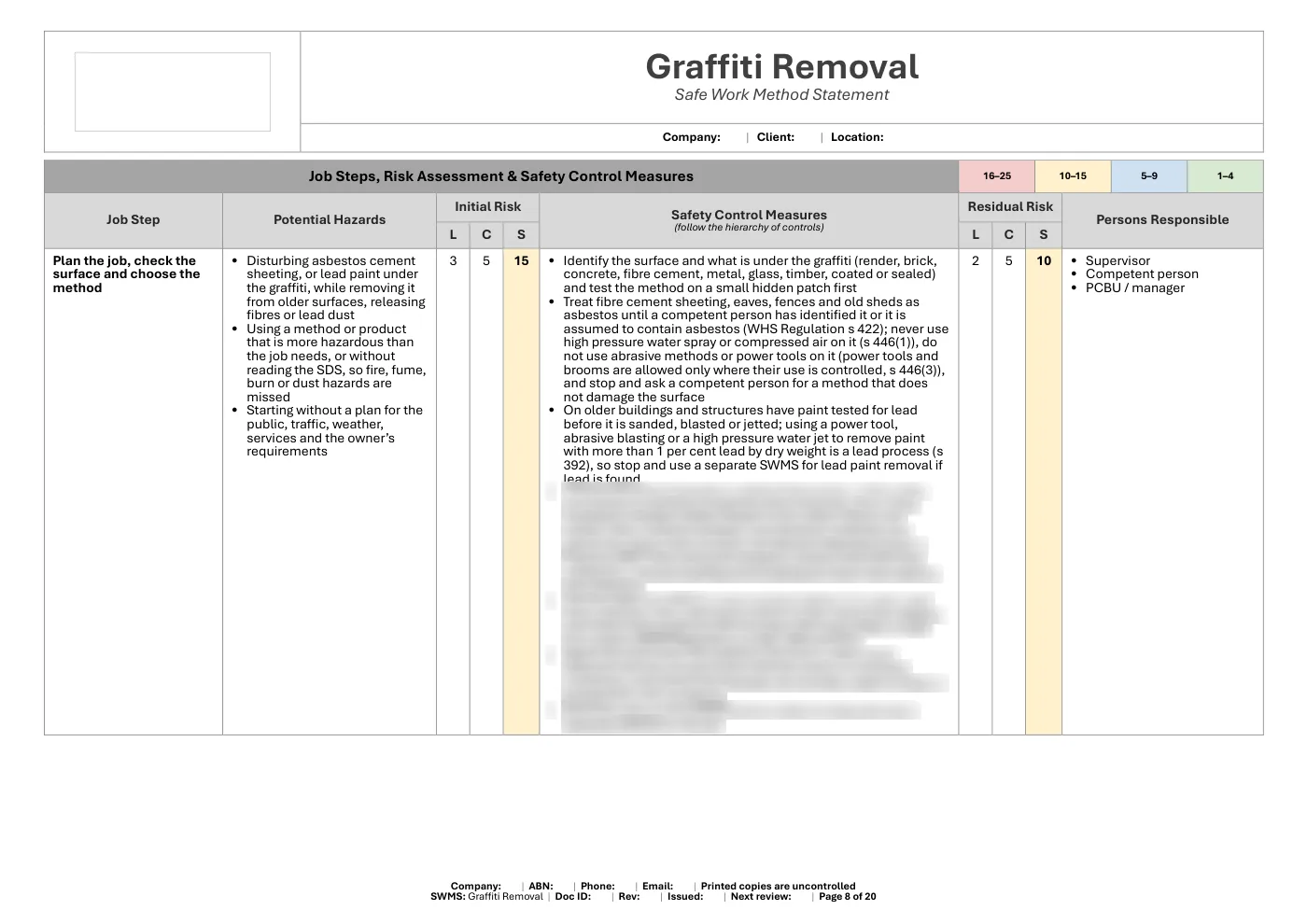
After the standard pre-start checks, the job steps run from “Plan the job, check the surface and choose the method” to “Clean up, dispose of waste and pack up”. The hazards and controls include:
- Solvent vapour and chemical burns from strippers
- Fire from flammable solvents and rags
- Overspray and drift reaching the public and neighbours
- Slippery wet surfaces and runoff
- Falls from ladders
- Asbestos cement and lead paint under the graffiti
- Silica, lead and other dust from abrasive methods
- Blast nozzle, hose and high pressure injury
- Rebound from pressure washing
- Overhead lines and electrical cabinets
- Needles and human waste at graffiti sites
- Traffic beside roads and rail corridors
- Noise, heat and manual tasks
High risk construction work
None of the high risk construction work items (WHS Regulation 2011 (Qld) s 291) are pre-ticked, because this job is not high risk construction work by itself. Tick any that apply on your site.
Licences, training and competency
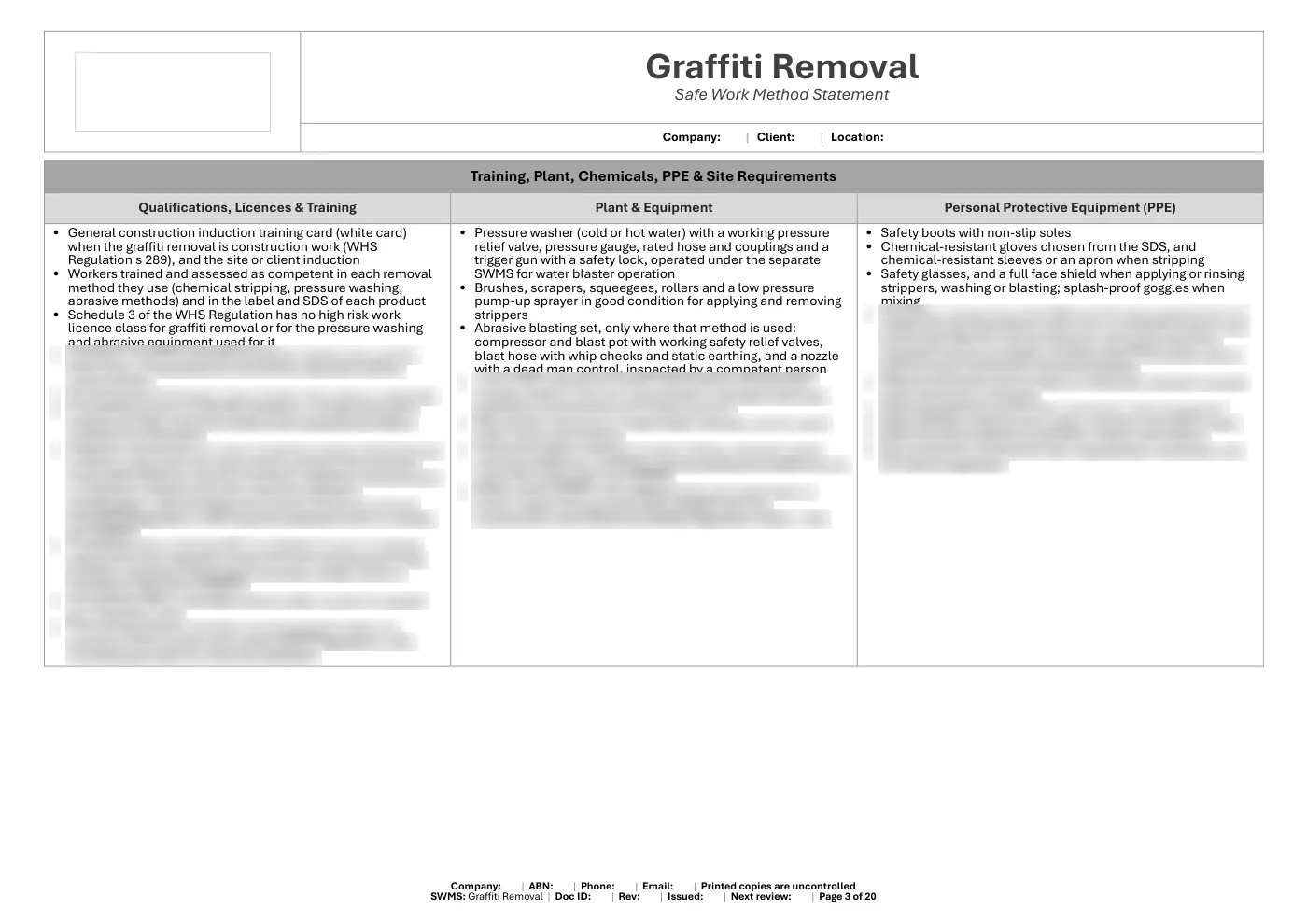
- General construction induction training card (white card) when the graffiti removal is construction work (WHS Regulation s 289), and the site or client induction
- Workers trained and assessed as competent in each removal method they use (chemical stripping, pressure washing, abrasive methods) and in the label and SDS of each product
- Schedule 3 of the WHS Regulation has no high risk work licence class for graffiti removal or for the pressure washing and abrasive equipment used for it
- Training in abrasive blasting equipment (dead man control, blast hose, compressed air and airline respirator) before anyone blasts
- Fit-testing and training for every worker who wears a respirator
- Competent person to identify asbestos, arrange lead paint testing and help make the written dust assessment before surfaces are disturbed
- Asbestos awareness so crews recognise suspect sheeting and surfaces, stop work and report them; workers the business reasonably believes may be involved in asbestos removal work or asbestos-related work also need the asbestos identification, safe handling and control measures training that WHS Regulation s 445 requires (asbestos work is outside this SWMS)
- Crystalline silica training (VET accredited course or training approved by the regulator) where the dust assessment finds grinding, sanding or blasting of concrete, render, brick or sandstone high risk (s 529CD)
- Accredited traffic controllers where traffic control is needed on or beside a road
- First aid equipment, facilities and trained first aiders (or access to them) as the work needs (WHS Regulation s 42), including eye wash for chemical splashes
Legislation and codes of practice referenced
- Work Health and Safety Act 2011 (Qld)
- Work Health and Safety Regulation 2011 (Qld)
- Managing Risks of Hazardous Chemicals in the Workplace Code of Practice 2021
- Labelling of Workplace Hazardous Chemicals Code of Practice 2021 (decanted containers)
- Abrasive Blasting Code of Practice 2021
- Spray Painting and Powder Coating Code of Practice 2021 (spraying outdoors: drift, wind and exclusion zones)
- Managing respirable crystalline silica dust exposure in construction and manufacturing of construction elements Code of Practice 2022
- How to Manage and Control Asbestos in the Workplace Code of Practice 2021
- Managing Noise and Preventing Hearing Loss at Work Code of Practice 2021
- Hazardous Manual Tasks Code of Practice 2021
- Managing the Risk of Falls at Workplaces Code of Practice 2021
- Managing Risks of Plant in the Workplace Code of Practice 2021 (plant, including pressure equipment)
- Managing the Work Environment and Facilities Code of Practice 2021 (outdoor work, heat and UV)
- First Aid in the Workplace Code of Practice 2021 (eye wash and shower equipment)
- Traffic Management for Construction or Maintenance Work Code of Practice 2008 (work beside a road)
- How to Manage Work Health and Safety Risks Code of Practice 2021
- Electrical Safety Act 2002 (Qld)
- Electrical Safety Regulation 2026 (Qld): overhead power line exclusion zones in schedule 2, and construction work equipment (s 140)
- Electrical Safety Code of Practice 2020 – Working near overhead and underground electric lines (distances come from the 2026 Regulation)
- AS/NZS 1716:2012 (Respiratory protective devices) and AS/NZS 1715:2009 (Selection, use and maintenance of respiratory protective equipment), as named in WHS Regulation s 529B
- Safe Work Australia model Code of Practice: Managing the risks of biological hazards at work (guidance)
What you get
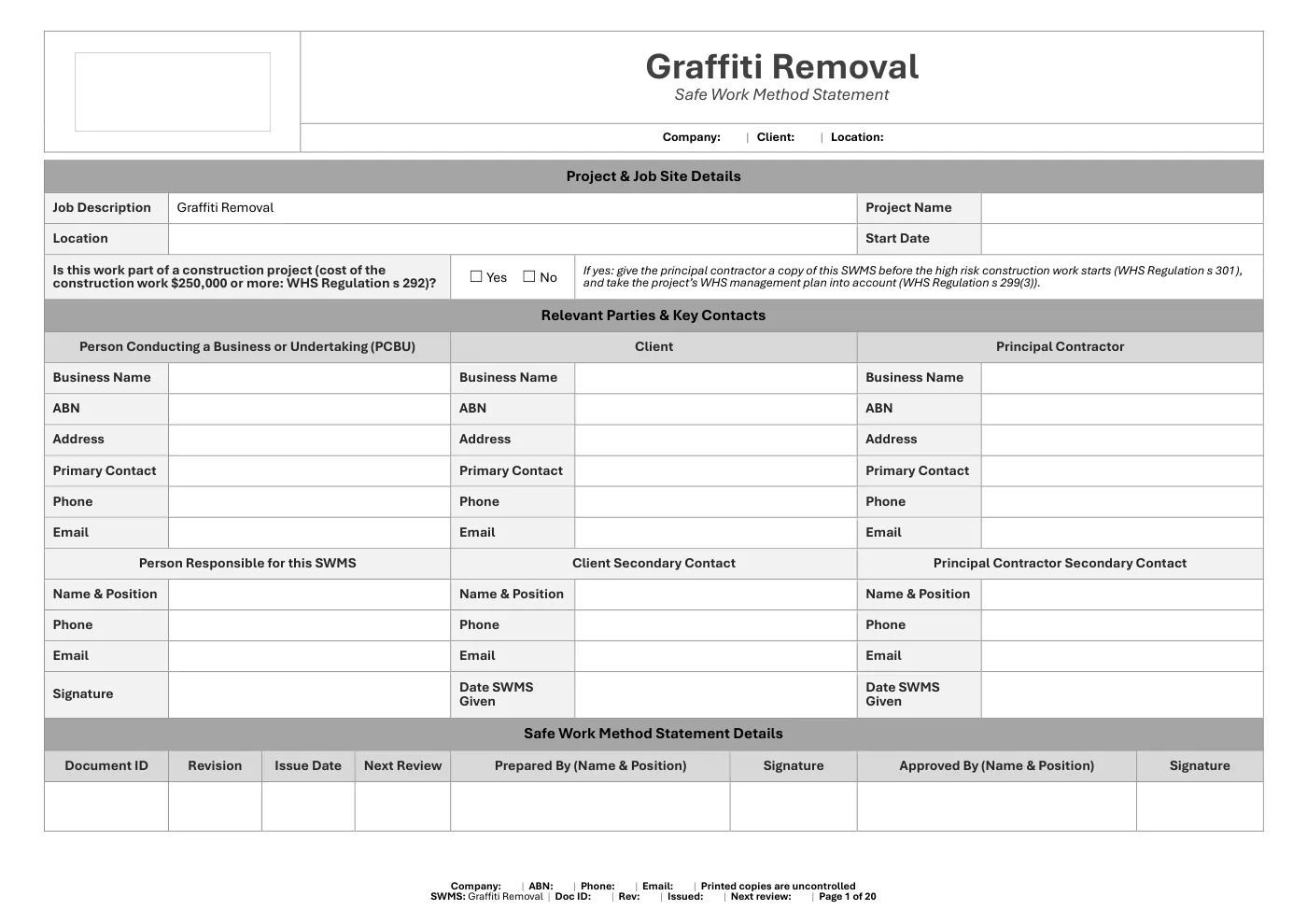
- An editable Microsoft Word document (20 pages), laid out on A4 landscape pages. Type your business, client and job details once and they fill in on every page, with a space for your logo
- 10 job steps for this work, each with its hazards, controls, initial and residual risk scores and the person responsible
- PPE listed for this job: safety boots with non-slip soles; chemical-resistant gloves chosen from the SDS, and chemical-resistant sleeves or an apron when stripping
- Emergency arrangements for: high pressure injection injury from a jet or blast nozzle, fall from a ladder and electric shock or contact with an overhead line
- Plus the parts every Work Safety QLD SWMS shares, from the s 291 checklist to the worker sign-on sheet (see the layout in our free SWMS template)
Adjust it for your site, plant and crew, and talk it through with your workers before work starts.
Checked against the Queensland laws and codes of practice listed above. Last reviewed October 2026.
Having trouble with your download? Contact us any time. Please read our Disclaimer before downloading.
How to use it
From download to site in three steps
Buy and download
Check out with card, Apple Pay or Google Pay. Your download buttons appear straight away and the links are emailed to you. Links work for 3 months, so save your copies.
Make it yours
Add your logo and business details in Word or Excel, or tick branding at checkout (A$29) and we add them. Then add your site and job details.
Brief your crew
Talk it through with the workers doing the job, have them sign on, and keep it on site. Review it whenever the job or conditions change.
What format is it?
Microsoft Word. Edit it in Word, or free in Word for the web, and add your own logo and business details. Or let us do it: tick "Add my business name and logo to every document" at checkout (A$29, free on orders of A$500 or more) and fill in a short form after payment.
How do I get it after I pay?
Your download buttons appear as soon as checkout finishes, and the links are emailed to you. You can re-download from your account at any time.
Is it compliant with Queensland law?
It's written around Queensland's Work Health and Safety Act 2011 and Regulation 2011. Tailor it to your site, consult your workers and review it whenever conditions change; no template can guarantee compliance on its own.
What if it isn't right for my job?
If it doesn't match its description or has a fault, tell us and we'll fix it. If you're still not happy, we'll refund you or give you store credit, your choice. Check the sample pages first, as we don't refund a change of mind.
Only logged in customers who have purchased this product may leave a review.
Reviews