For builders, principal contractors and site managers who set up a new building site. It follows the work from the site plan and WHS management plan through locating services, deliveries, site security, placing sheds, amenities and drinking water, temporary power and lighting, signs and laydown areas, to the first inspection and handover. Fencing, traffic management, hoarding frames, shed lifting and the temporary power installation are covered by separate SWMS.
Establishing a site is construction work (WHS Regulation s 289), and delivery trucks, forklifts and cranes move in the area, so the item for movement of powered mobile plant (s 291(o)) is ticked. Tick the others that apply to your job: work on or near energised electrical installations or services (reg 291(k)), for example digging near underground cables or an electrician connecting to a live supply, a road in use by traffic (reg 291(n)), a risk of a fall of more than 2 metres, or a trench or shaft deeper than 1.5 metres when digging for footings or services.
New to SWMS? Read What Is A Safe Work Method Statement?
What Is Covered In Our Site Establishment SWMS?
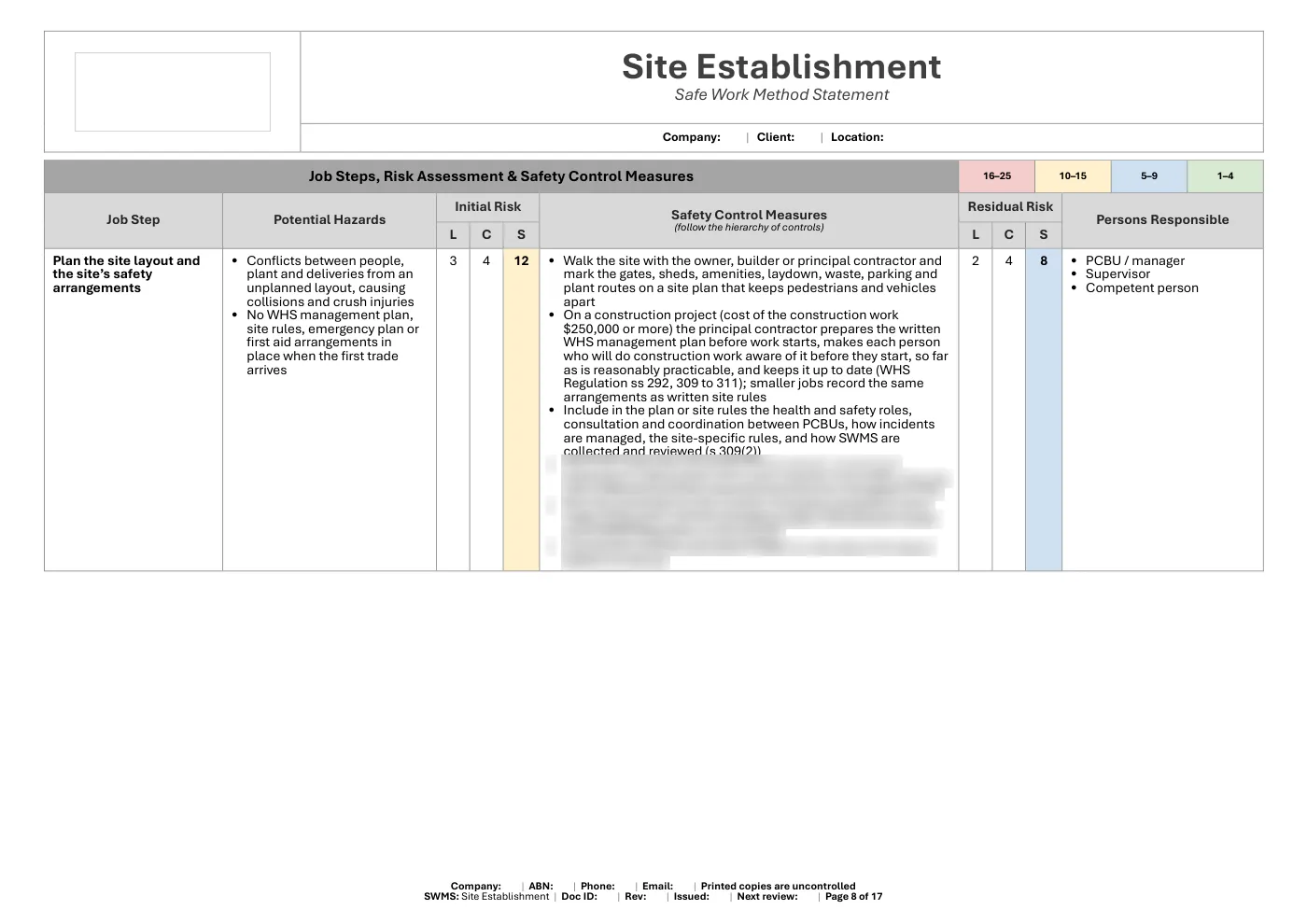
After the standard pre-start checks, the job steps run from “Plan the site layout and the site’s safety arrangements” to “Inspect, hand over and keep the set-up safe”. The hazards and controls include:
- Planning the site layout and the WHS management plan
- Overhead power lines and underground services
- Delivery trucks, forklifts and reversing plant
- Loads shifting or falling during unloading
- Unauthorised entry and public protection
- Hoarding and falling objects
- Site sheds and containers tipping or sliding
- Falls from steps and landings of site units
- Toilets, drinking water and hygiene
- Heat and sun exposure
- Electric shock from temporary power and leads
- Generators, fuel and fire
- Laydown, stacking and waste
- Signs, walkways and site inductions
High Risk Construction Work
These high risk construction work items (WHS Regulation 2011 (Qld) s 291) are already ticked because they are part of this work. Tick any others that apply to your job:
- Is carried out in an area at a workplace in which there is any movement of powered mobile plant
Licences, Training and Competency
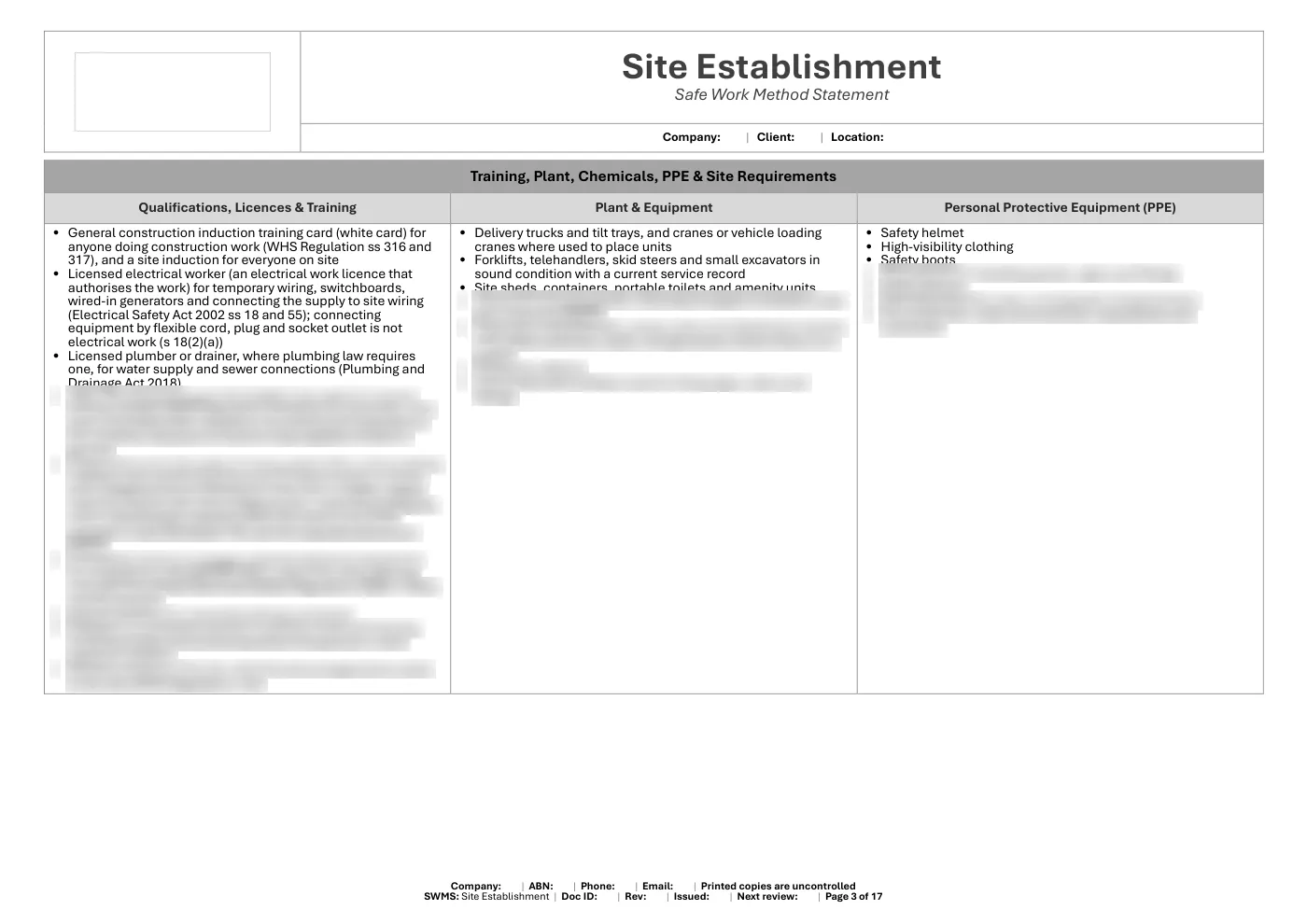
- General construction induction training card (white card) for anyone doing construction work (WHS Regulation ss 316 and 317), and a site induction for everyone on site
- Licensed electrical worker (an electrical work licence that authorises the work) for temporary wiring, switchboards, wired-in generators and connecting the supply to site wiring (Electrical Safety Act 2002 ss 18 and 55); connecting equipment by flexible cord, plug and socket outlet is not electrical work (s 18(2)(a))
- Licensed plumber or drainer, where plumbing law requires one, for water supply and sewer connections (Plumbing and Drainage Act 2018)
- High risk work licence for the forklift truck class for anyone driving a forklift (WHS Regulation Schedule 3); excavator, skid steer and telehandler operators are trained and assessed on the machine, because no licence class applies to them in general
- Crane licence for the class of crane used to lift a unit (a vehicle loading crane needs its licence at 10 metre tonnes or more), and a dogging licence (Schedule 3 item 4) or a higher rigging class for anyone who does dogging work, meaning slinging the unit or directing the operator when the load is out of the operator’s view (Schedule 19); see the separate placement SWMS
- Competent person to inspect and test electrical equipment for compliance with AS/NZS 3012, and to fit a test-date tag only with the details Electrical Safety Regulation 2026 s 140(3) and (4) requires
- Trained spotters for reversing vehicles and plant
- Engineer or competent person to advise on ground bearing, hoarding design and anchoring where the ground or wind exposure needs it
- Workers trained in first aid, with first aid arrangements suited to the site (WHS Regulation s 42)
Legislation and Codes of Practice Referenced
- Work Health and Safety Act 2011 (Qld)
- Work Health and Safety Regulation 2011 (Qld)
- WHS Regulation 2011 (Qld) ss 289, 291, 298 and 299: construction work, high risk construction work, security of the workplace and safe work method statements
- WHS Regulation 2011 (Qld) ss 292, 293 and 308 to 315: construction project, principal contractor, signs, WHS management plan, arrangements for further duties (s 314) and the specific risks of materials and waste, plant not in use, traffic and essential services (s 315)
- WHS Regulation 2011 (Qld) s 315A and schedule 5A: amenities provided by the principal contractor
- WHS Regulation 2011 (Qld) ss 41 to 43: facilities, first aid and emergency plan
- WHS Regulation 2011 (Qld) s 304: underground essential services information
- WHS Regulation 2011 (Qld) ss 306A to 306Q and 315B to 315M: falls, falling objects, hoarding and closing an adjoining area
- WHS Regulation 2011 (Qld) ss 214, 215 and 219: powered mobile plant and plant that lifts or suspends loads
- Electrical Safety Act 2002 (Qld): ss 18 and 55 (meaning of electrical work, and electrical work to be done by a licensed electrical worker)
- Electrical Safety Regulation 2026 (Qld): s 140 (electrical equipment and wiring for construction work) and ss 10 to 13 and schedule 2 (overhead electric lines)
- Plumbing and Drainage Act 2018 (Qld): ss 56 to 58 (a licence is needed to carry out, supervise or direct plumbing or drainage work, with exemptions that include unregulated work)
- Heavy Vehicle National Law (Queensland), applied by the Heavy Vehicle National Law Act 2012 (Qld): s 6 (heavy vehicle means a vehicle with a GVM or ATM of more than 4.5 t), s 26C (primary duty of each party in the chain of responsibility), s 96 (compliance with mass requirements), s 110 (national regulations may prescribe loading requirements), s 111 (compliance with the loading requirements) and s 228 (duty of driver to avoid driving while fatigued or unfit to drive)
- Managing the Work Environment and Facilities Code of Practice 2021
- Managing Risks of Plant in the Workplace Code of Practice 2021
- Hazardous Manual Tasks Code of Practice 2021
- Managing the Risk of Falls at Workplaces Code of Practice 2021
- First Aid in the Workplace Code of Practice 2021
- How to Manage Work Health and Safety Risks Code of Practice 2021
- Work Health and Safety Consultation, Co-operation and Co-ordination Code of Practice 2021
- Traffic Management for Construction or Maintenance Work Code of Practice 2008
- Electrical Safety Code of Practice 2020 – Working near overhead and underground electric lines (distances come from the Electrical Safety Regulation 2026)
- AS/NZS 3012 (Electrical installations – Construction and demolition sites), as named in the Electrical Safety Regulation 2026 s 140
What You Get
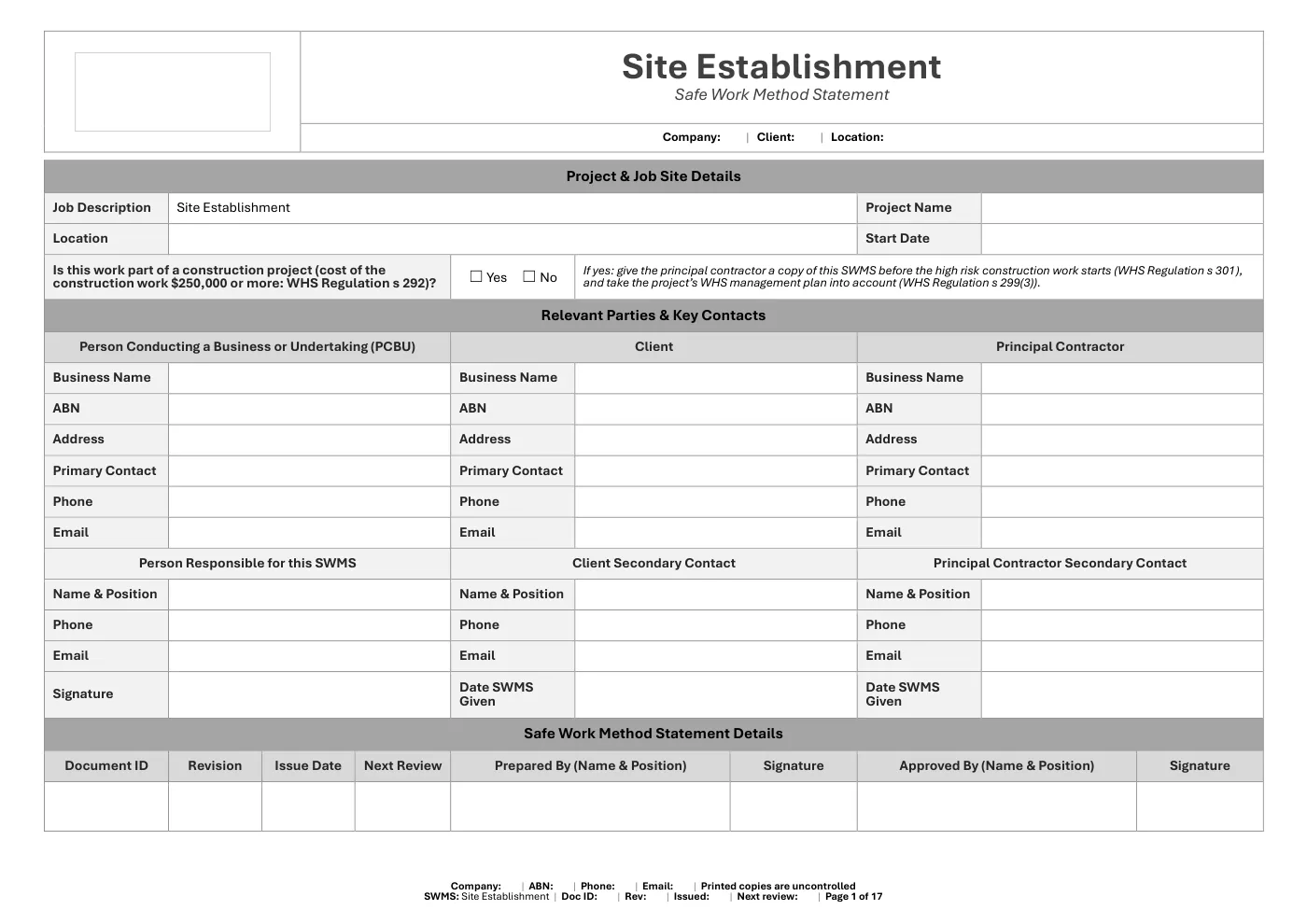
- An editable Microsoft Word document (17 A4 landscape pages). Type your business, client and job details once and they fill in on every page, with a space for your logo
- 9 job steps for this work, each with its hazards, controls, initial and residual risk scores and the person responsible
- PPE listed for this job: safety helmet; high-visibility clothing; safety boots; work gloves for handling panels, signs and fittings
- Emergency arrangements for: power line contact (general guidance), unit, load or vehicle crushing a person and electric shock
- Plus the parts every Work Safety QLD SWMS shares, from the s 291 checklist to the worker sign-on sheet (see the layout in our free SWMS template)
Adjust it for your site, plant and crew, and talk it through with your workers before work starts. Please make sure you read our Disclaimer before downloading this SWMS.
Checked against the Queensland laws and codes of practice listed above. Last reviewed November 2026.

Reviews